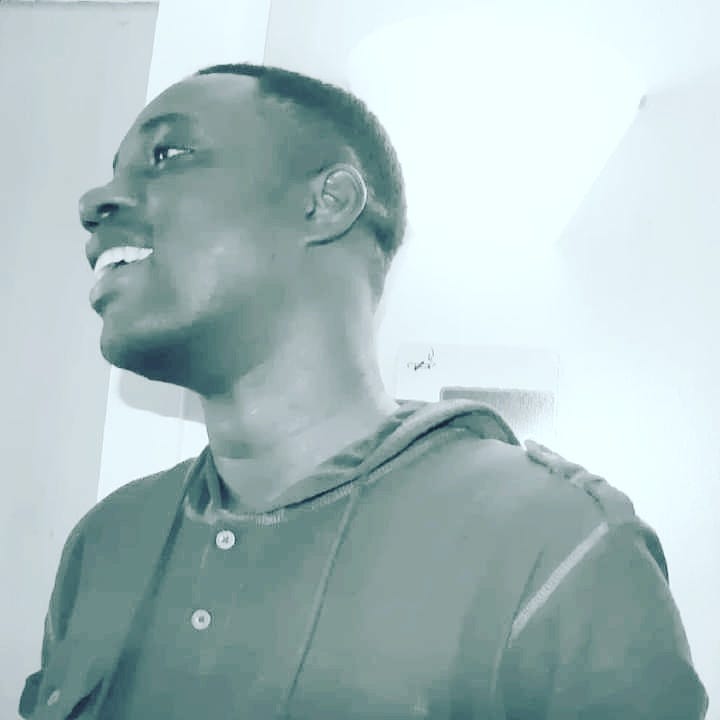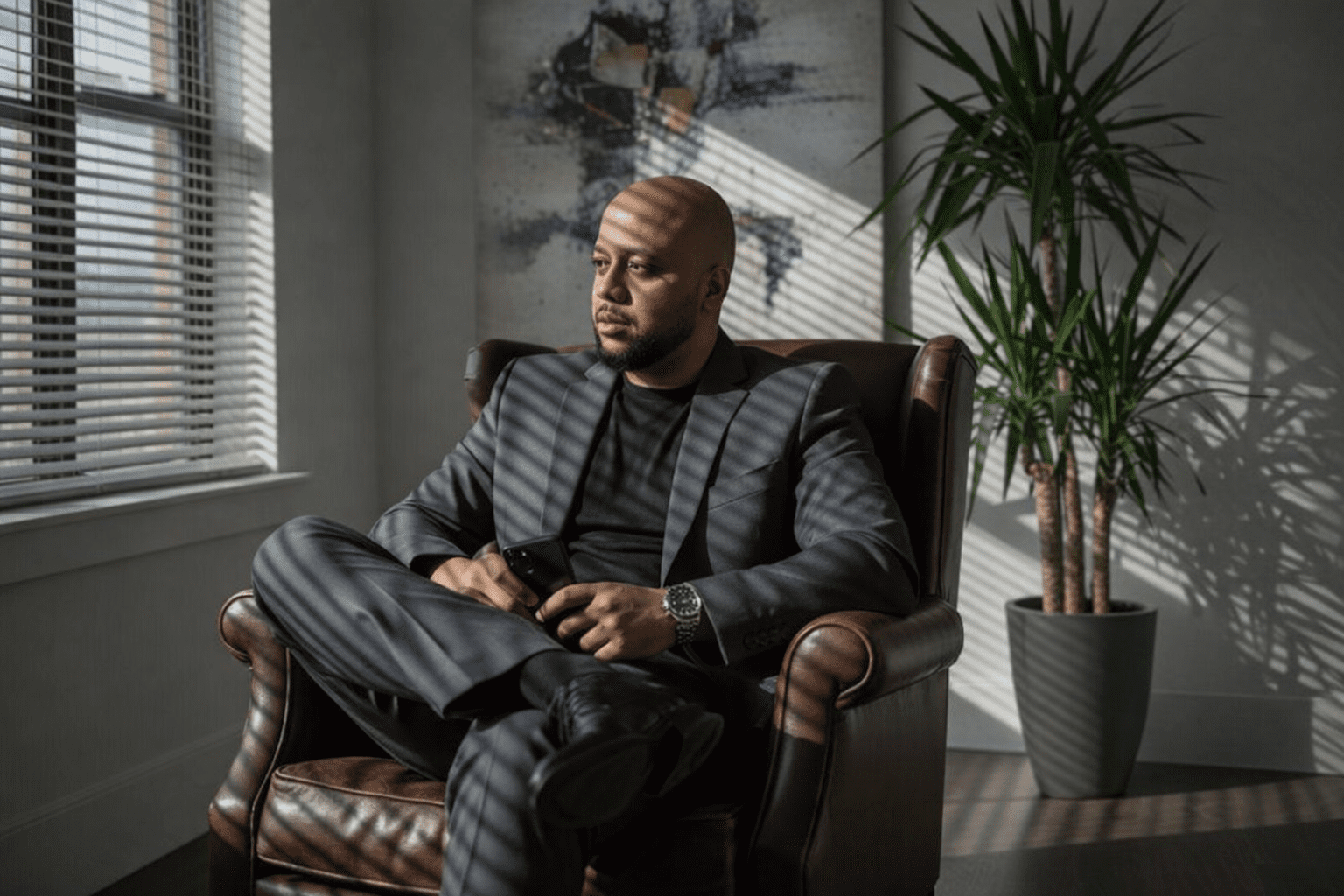
Bode’s Story: When Love Meets a Wall
Bode grew up in Lagos in the 1980s, when American pop culture quietly shaped the imagination of a generation. R&B, hip hop, and soul were not simply music genres. They were a presence. Michael Jackson, Tupac, Joe, and Jennifer Lopez were woven into everyday life.
In Nigeria, American slang slipped into comical conversations. Accents were copied in schoolyards. Nollywood characters such as Jim Iyke carried the fascination into film. For Bode, it went deeper than influence.
It felt like a connection.
He saw Black Americans as part of a shared story. They were people separated by history but still bound by something real. It was not something he had been taught formally. It was something he felt.
When he relocated to Atlanta, Georgia, he believed he was stepping into a world he already knew. It could have been the best moment of his journey. Instead, it became the beginning of a difficult realisation.
His children came home from school with stories he could not ignore. Their accents were mocked. They were spoken to as if they were less informed, less aware and less than by Black people who looked like them.
The first time it happened, he brushed it aside. The second time, he paid attention. By the third, it stayed with him.
It was not simply what was said. It was what rested beneath it.
A quiet assumption.
Bode felt it as well. He sensed it in conversations; in the way Black Americans responded to him and in the quiet distance that never announced itself but was always present.
He did not expect that.
And more than anything, he did not understand it.
How do you grow up admiring people, only to arrive and feel as though you are being measured against a story you did not write?
That question followed him.
The Realisation: Silence Has a Cost
Bode could have dismissed the experience as individual behaviour. Instead, he chose to look deeper.
What he found was not simply ignorance. It was absence.
There was very little structured teaching about Africa in many American classrooms. What existed was often incomplete, flattened, or filtered through narrow historical frames. For generations, knowledge of the continent came second hand, shaped by media, stereotypes, and inherited narratives.
That absence had consequences.
What Bode experienced was not simply personal tension. It was the result of a long gap; one filled with assumptions instead of understanding.
What is not taught does not remain empty. It becomes filled.
And what fills it is not always true.
A New Visibility and Old Wounds
Years into his stay, Bode began to notice a shift. Africa was becoming more visible. Through livestreams and social media, cities such as Lagos, Accra, and Nairobi were appearing in real time, unfiltered and immediate.
For many in the diaspora, this was new. Africa was no longer distant. It was visible, active, and present.
For Bode, it felt long overdue.
Visibility does not undo history.
It often reveals it.
He noticed how quickly misunderstandings surfaced in everyday conversations. Africa was still described as a country. Complex realities were reduced to single ideas.
These were not minor errors.
They carried the weight of something older.
When a place is repeatedly simplified, it is not simply misunderstood. It is diminished.
What Was Lost Was Not Accidental
The more Bode reflected, the clearer the pattern became.
The distance between Africans and Black Americans was not natural. It was constructed.
Slavery did not only take people from their land. It severed identity at its root. Language, names, history and cultural continuity were deliberately broken.
Generations were raised without access to origin.
That rupture did not remain in the past. It shaped what people know and what they were never given the chance to learn.
Understanding this did not erase the tension Bode felt.
It gave it context.
The Africa That Is Often Misrepresented
As Bode continued to question what he was seeing, another contradiction became impossible to ignore.
The way Africa was spoken about did not match the role it plays in the world.
He had heard the language before. Africa is poor. Africa is struggling. Africa as peripheral.
Reality tells a different story.
The continent sits at the centre of global supply chains, energy systems, agriculture, and critical minerals. From cobalt to crude oil, from rare earth elements to vast agricultural potential, Africa remains deeply tied to how the modern world functions.
If it were truly irrelevant, there would be no global competition for its resources, no strategic interest, and no sustained engagement from powerful nations.
The narrative persists regardless.
For Bode, that contradiction revealed something uncomfortable. Narratives are not always built on truth. They are often shaped by interest.
When those narratives travel across generations, they stop being questioned.
They become accepted.
Reconnection Requires Structure
This realisation changed how Bode understood the divide.
If perception has been shaped over time by distortion and absence, then reconnection cannot be left to chance.
Without structure, it collapses into sentiment.
Good intentions are not enough.
Reconnection requires education that is honest and complete. It requires travel that is intentional rather than performative. It requires cultural exchange that is sustained rather than seasonal. It requires policy that encourages engagement rather than assumption.
This is why initiatives such as Ghana’s Year of Return and the rise of Detty December matter. They are not simply cultural moments. They are deliberate attempts to rebuild a bridge that was once violently broken.
Something changes when people move beyond screens.
When they share space. When they ask questions. When they experience one another without filters.
Assumptions begin to weaken.
Distance loses its authority.
Bode saw it happen, slowly but clearly.
No Gatekeepers and No Saviours
What also became clear is that this moment does not need performance.
Africa does not need to be romanticised. It does not need to be reduced to a symbol or defended without critique. It needs to be understood in its full complexity.
The diaspora does not need gatekeepers to decide who belongs. It needs honesty, humility, and a willingness to unlearn.
This is not about proving anything.
It is about seeing clearly.
A Difficult but Necessary Path Forward
Bode’s journey did not end with certainty. It ended with awareness.
The divide between Africa and its diaspora was not born from hatred. It was shaped by history, silence, and distance.
Which means it can be reshaped.
It requires effort. It requires curiosity. It requires people who are willing to question what they have inherited.
Africa does not ask to be simplified.
It asks to be understood.
For Bode, the realisation came full circle at home. The same children who once returned from school, confused by how they were seen are now learning to understand the gap for themselves.
The distance is real.
The possibility of closing it is real as well.
That is where the work begins.